Frenchman’s Ferry
by D Bedell

One
The Nishnabotna is a slow river that slips into the surge of the Big Muddy just beyond Frenchman’s Ferry. Sycamores and willows mark its path through the eponymous county to the confluence near Angel City. Catfish grow large in the languid stream and crawdads for bait are plentiful. In late summer, grasshoppers as long as a finger swarm thickly on the mud at the water's edge. It was “The Place of Building Canoes” in the language of the Otoes whose villages lined its banks before the Platte Purchase. The Otoes were mostly gone from the county, herded to the Indian Territories in Kansas and Nebraska. A few descendants still lived at the fish camp near Angel City.
Tom Stackwood poled his jon boat under a willow that reached from the bank and grasped a branch to hold the boat steady. Past the ferry, the Nishnabotna was pulled from its banks into the Missouri’s torrent with whirlpools marking the rendezvous. He would not go onto the Missouri; it was too swift and deep to pole. Stackwood sighed and thought about gigging a catfish. Weary of fried fish, he saw little alternative for his supper.
Catfish and greens.
Touching the boat to the bank, Stackwood stepped out and tied the bow line around the willow. He pulled the makings of a cigarette from his overalls pocket and rolled a thin smoke to ration his tobacco for a few more days. Exhaling a line of smoke, he looked at the traces of the long abandoned ferry station. It had been the St. Joseph-Council Bluffs stage crossing before the Kansas City-St. Joseph-Council Bluffs Railroad built a bridge over the river at the Narrows and bypassed it. The namesake Frenchman had built the first cabin in the county and married an Otoe woman who helped him run the ferry. One of their sons became a notorious renegade in the Territories.
Need to get a fish.
Stackwood flipped the cigarette butt into the river and took his gig from the boat. He began to stalk the bank looking for catfish or drum drifting unaware of his intent, keeping a close eye for cottonmouths in the tepid water. One had crawled into his boat once and he nearly capsized killing it. He remembered a story of a man who fell into a nest of water moccasins and was bitten to death.
Helluva way to go.
It was July hot and the air was still but for the whirring wings of grasshoppers roused from the bank. His overalls and shirt soon stuck to him in dark patches while sweat stung his eyes. He tied his blue bandanna around his head to stop the sweat, wishing he had worn his cap. Sweat was dripping from his nose when he spotted a catfish in a cutbank pool under the shade of a sycamore. He drew back the gig and sent it deep, the lanyard firm in his hand as the fish thrashed, stirring mud from the bottom. After pulling the big catfish to the bank, he took out his pocket knife and cut its spine behind the head, then gutted it, flinging the entrails into the water. Stackwood picked the fish up by the gills and made his way back to the boat, wondering if he had enough lard to fry fish and add a dollop to a pot of greens.
Gotta last ‘til payday.

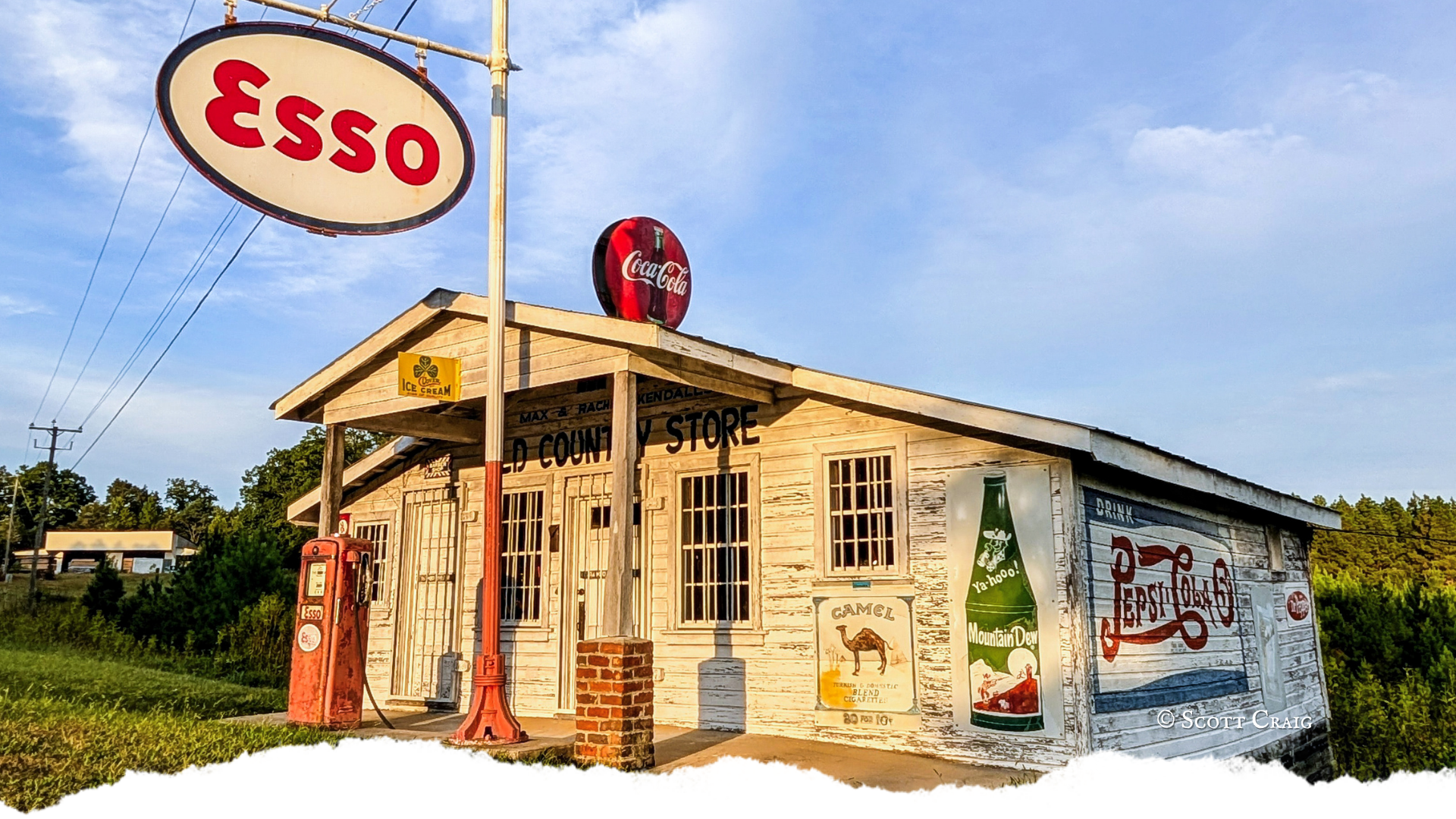
“It had been the St. Joseph-Council Bluffs stage crossing before the Kansas City-St. Joseph-Council Bluffs Railroad built a bridge over the river at the Narrows and bypassed it.”

Two
It rained in the early evening, darkening the house worn grey by bitter winters and blistering summers, the remaining paint at the corners curling in cracked scales. Stackwood sat on a fruit crate and looked at the cattails in the slough beyond the row of hedge apple trees behind his porch. Sloughs wove through the bar land connecting fields and timber to the Missouri River and its tributaries. It was possible to pole a jon boat through much of Nishnabotna County with little portage to reach the river channel. He rolled two cigarettes for the night and sat smoking in the twilight as frogs in the cattails raised their chorus in stentorian tones.
Friday was payday from his WPA job laying bricks on Main Street in Angel City. He was impatient of the day, short on coffee and tobacco, anticipating a trip to the General Merchandise for his reward of hard labor. Laying brick was hot work in July and the two coloreds in the gang set a hard pace to keep. One of them passed out in the heat and was left behind in shade, broken by the sun. Stackwood was sure the man would never be good enough to work on a road gang again.
God knows a man shouldn’t have to work like that.
The wind freshened, blowing rain into the porch. Stackwood finished the cigarette and went inside the dark house. He did not need light to find his way to the kitchen table and the hurricane lamp. Removing the chimney, he lit the lamp and trimmed the wick close, making small shadows on the walls. Stackwood eschewed electricity, a convenience he could not afford on the 40 dollars a month the WPA paid. He mentally added lamp oil and wick to his list for the General Merchandise.
Money goes fast.
He stoked the wood stove and put leftover coffee on to heat. It was a warm night even with the rain, but he liked to savor a cup of hot coffee in the evening while he smoked. While the coffee heated, he poured a splash of whiskey into a cup and sipped. He poured the boiling coffee on top of the whiskey to add to the flavor or perhaps dull it. The catfish had been filling and the lull of a full stomach pulled him into the night. He took the second cigarette from his pocket and lit it.
Helluva Saturday night.
The rain lasted into Sunday morning with a slow drizzle that dripped from the trees and glistened on the cattails in the weak dawn. Stackwood made cornbread in a skillet to have with spiked coffee, his Sunday communion. He rolled cigarettes for the day while the cornbread cooked and the coffee boiled. Corn meal was added to the store list.
Might be fish in the cattails.
He did not want to make a trip to the Nishnabotna and thought he could at least gig some frogs in the slough. Frog legs were better than nothing, although fish would be better. The slough was half full and it was reasonable to think there might be fish. Either way, he would not go entirely hungry. Stackwood wondered at the people in Angel City who watched the paving gang labor brick by brick. They would sit down to Sunday dinner and praise their good fortune in pious displays. The ritual was lost on Tom Stackwood; he did not see it in his future.
Fishes and loaves. Beggars and thieves.
Three
The sun was hot early on Monday and the crew was sweating from the start. By mid-morning, Stackwood’s head was pounding and his eyes were becoming bleary. At the noon halt, he sat in the shade of the General Merchandise awning, not bothering to eat the cornbread he had saved, only drinking from his old army canteen. His mouth felt full of sand and he thought he would go the way of the colored man, broken for the sake of a brick street. He closed his eyes and tried to calm his racing heart.
Son of a bitch. Gotta make it to payday.
He had nothing but work. Flat broke, he would starve or go insane, or both, without work. The WPA was his only salvation and also that of many others in the county. There were rumors that after the paving job, the gang would replace the bridge across the Nishnabotna Narrows above the ferry. The work would not be any easier, but it was steady and certainty was hard to find anywhere in the county. He felt better in the shade and was able to answer the work call without blackness closing in on his eyes. The afternoon was long and he was nauseous with a throbbing headache. The boss noticed and put Stackwood to hauling bricks to the setters, a small relief to avoid losing another man to the sun and putting the work behind.
When the day was over, Stackwood sat for a long time in Angel City Park to quell his headache and nausea. He was not looking forward to the walk home and wondered if he could make it back tomorrow. It was not a choice; four more days until payday and then he could breathe. The walk home revived him a little, his pace slow and ragged. At the house, he put his head under the kitchen pump and stroked it until he was soaked to the waist. He brought in a bucket and the galvanized bathtub from the porch. Once the tub was half full, he poured a generous cup of cold coffee splashed with whiskey and downed it in one quaff. He got into the tub still wearing his clothes, hanging his feet over the sides, heels of his boots touching the floor, sitting through the dusk and dozing into the dark. When he woke, he sat at the kitchen table and rolled a cigarette absently. He had no appetite and no inclination to get out of his wet clothes. He drank more coffee and whiskey, feeling the pull of his iron frame bed and corn husk mattress.
Only one smoke tonight.

“They would sit down to Sunday dinner and praise their good fortune in pious displays. The ritual was lost on Tom Stackwood; he did not see it in his future.”

Four
In the morning, he woke in still damp clothes with a calm weariness and believed he was going to make it another day on the gang. There was nothing but to endure. A piece of leftover cornmeal smeared sparingly with lard was his breakfast. The walk into Angel City was resolute. When he got to Main Street, the gang was forming up for the day. He hoped for another stint as a hod carrier instead of laying bricks, stooped over constantly with blood rushing to his head. It felt like his eyes were falling out and he couldn’t risk passing out to be left behind. The boss remembered his ordeal and put him on a wheelbarrow to ferry bricks to the setters.
Humping bricks was work for the strong and Stackwood was lean with muscles stretched like iron bands across his frame. Years of field and timber work had forged him to uncommon hardness. Some of the gang had been soft at the beginning and had suffered for it greatly, falling behind under the boss’s invective. The WPA was no place for soft hands or weak backs–or those who fell behind. They were all leaner and weathered by the sun, the softness burned away, ready for the next job.
The gang was almost at the end of Main Street with the brick. Another day and the job would be done two days early. Cleanup, the easy part of the job, would take them to Friday at a pace leisurely by comparison. Stackwood knew he could make it and savored the thought of walking into the General Merchandise with money to spend. He wondered if he could get credit to buy a can of bully beef for lunch, but decided against asking.
Ain’t gonna beg.
With the end in sight, the boss eased up on the gang, letting them set their own pace. The remaining colored man slowed down to the relief of the gang. They did not not want to work themselves out of a job. Stackwood was not the only one who was flat broke. All were counting on going to the General Merchandise to relieve the paucity of their larder. Rathbone, the storekeeper, would be waiting for a busy Saturday selling staples, tobacco, and whiskey. He would sell little in the way of notions or anything else not needed to make it to the next payday. Corn meal, coffee, flour, beans, and bully beef would make up the bulk of his sales. Tobacco and whisky were at the top of some lists, including Stackwood’s. Rathbone would get his payday, too.
The gang worked through the noon halt on Wednesday to finish the last bit of bricking. The setters stretched their backs when the last brick was laid and the hod carriers rested their wheelbarrows. They all looked back at the street and wondered how they had done it. Shopkeepers came out and looked at the street, a civic improvement for the benefit of commerce. It was a marvel of modern times.
Helluva thing.
The cleanup went quickly. Wheelbarrows were loaded onto a truck for the next job while tools were cleaned and stacked alongside. Friday came and the boss cut the gang loose in the park to pick up trash for a make-work project. The WPA had to be seen working at something for the good of the citizenry. It was unaccustomed idleness for the gang and there was some horseplay to lighten the wait for the payday call. When it came, the queue was boisterous, the men revived by the prospect of money with Monday two days away.
Rathbone kept the General Merchandise open late on paydays, not wanting the urge to spend to go unfulfilled. He sensed an appetite that might quell overnight. Stackwood joined the line at the counter for tobacco and whiskey, two tins of bully beef and a sack of corn meal in his hands. Seeing him, Rathbone set three cans of Prince Albert with papers on the counter and looked at Stackwood with a question. Stackwood nodded and Rathbone set a pint of whiskey next to the tobacco.
Helluva Friday night.
—This piece is a companion to The Last Nickel—

D Bedell has a BA and MS from Missouri State University. His work has been published in The Charleston Anvil, Dark Horses Magazine, Floyd County Moonshine, The Gilded Weather Vane, Stygian Lepus, Susurrus, and Veterans' Voices Magazine.
